How to Get the Most Out of Your Deck or Patio During Winter in Oregon and Washington
Winters in Oregon and Washington can be wet and cold, but that doesn’t mean you have to stop using your deck or patio. Your outdoor space does need a little attention before the season begins, though.
Preparing your deck or patio for winter involves protecting it from wet weather while keeping the space comfortable and usable throughout the season. A few basic maintenance steps can help get the space ready, while features like overhead shelter, wind protection, and dry storage can make a noticeable difference.
Here are some practical ways to get your deck or patio ready for winter and make the most of it during the colder months.
Clean Your Deck or Patio Before Winter Weather Settles In
You don’t need to give your deck a complete overhaul before winter, but a few simple steps are worth taking care of.
Start by clearing away leaves, pine needles, dirt, and other debris that can hold moisture against the surface. Move planters, rugs, and furniture so you can clean underneath them, and make sure gaps and drainage paths remain clear.
If you have a wood deck, check the condition of the existing stain or sealer. If water no longer beads on the surface, the color has faded significantly, or the wood looks dry and exposed, it may be time for another coat. You’ll also want to stain your deck during a stretch of dry weather, so the finish has enough time to cure.
While you’re there, look for obvious issues such as loose railings, damaged boards, protruding fasteners, or unstable stairs. More detailed cleaning, maintenance, and inspection guidance can be found in Rick’s deck maintenance resources.
For step-by-step staining advice, see Rick’s guide to staining your fence or deck.
You don’t need to deep-clean every inch before winter, but removing the buildup that holds moisture can make routine upkeep much easier.
Add a Patio Cover or Wind Protection for Winter
If you want to keep using your deck or patio through winter, shelter can make one of the biggest differences.
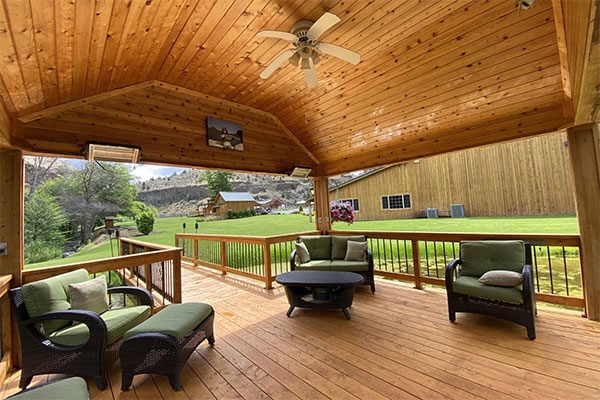
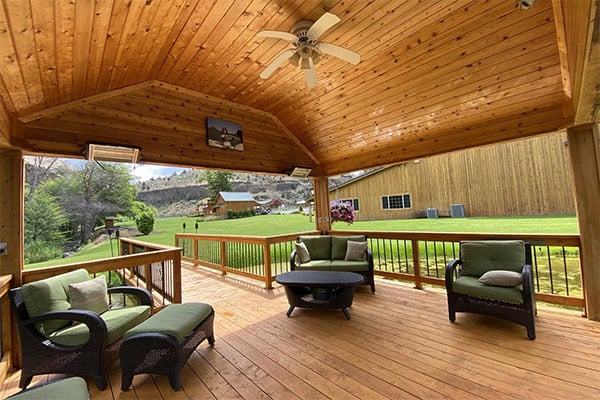
A patio cover can create a more dependable place to gather without having to wait for a dry day. Depending on your space, that might mean a solid patio cover, an acrylic option that lets in natural light, or a low-maintenance aluminum cover.
Wind can matter just as much as rain, especially on exposed or elevated decks. Privacy screens, partial walls, or thoughtfully placed fencing can help cut down on wind without completely closing off the space.
The right setup depends on how you use your deck or patio and how much protection you need. For some homeowners, covering one main seating area is enough to make the space much more useful.
Add Warmth and Lighting for Winter Evenings
Warmth and lighting can make your deck or patio feel much more comfortable after the sun goes down.
For warmth, focus on the area where people gather rather than trying to heat the whole space. Outdoor-rated patio heaters, fire tables, or other heat sources can work well when installed and used according to manufacturer guidelines.
Lighting should do two jobs: help people move around safely and make the space feel inviting. Start with stairs, landings, walkways, and entry points, then add softer lighting around gathering areas.
Create Protected Storage for Winter Essentials
Having a dry, convenient place to keep the outdoor items you still use in winter can make the space much easier to enjoy.
That might include:
- Seat cushions
- Blankets
- Grilling tools
- Small gardening supplies
- Kids’ outdoor gear
A weather-resistant storage bench or deck box can work well for smaller items, while a covered area or dry space beneath an elevated deck can provide more room.
The key is to keep storage convenient without letting it take over the deck or patio. If something needs to be moved every time you want to use the space, you’re probably less likely to use it at all.
Make Better Use of the Space Beneath an Elevated Deck
If you have usable space below your deck, keeping it dry can give you another area to use during wet weather.
An underdeck drainage system captures water that passes between the deck boards and redirects it away from the area below. That can create a much drier space for storage, seating, or grilling. Rick’s installs these systems to help homeowners turn otherwise exposed space beneath elevated decks into more functional areas.
How Can You Manage Rainwater Around Your Deck or Patio?
Good drainage helps prevent water from pooling around the areas you use most.
Check that gutters, downspouts, and other drainage paths are clear, and pay attention to spots where water tends to collect near stairs, patio edges, or the base of the deck. If you regularly see standing water, that can be a sign that runoff needs a better path away from the space.
Patio covers should also be planned with drainage in mind, so roof runoff moves away from the patio and surrounding areas rather than creating a new wet spot.
Winter Deck and Patio Prep: What Makes the Biggest Difference?
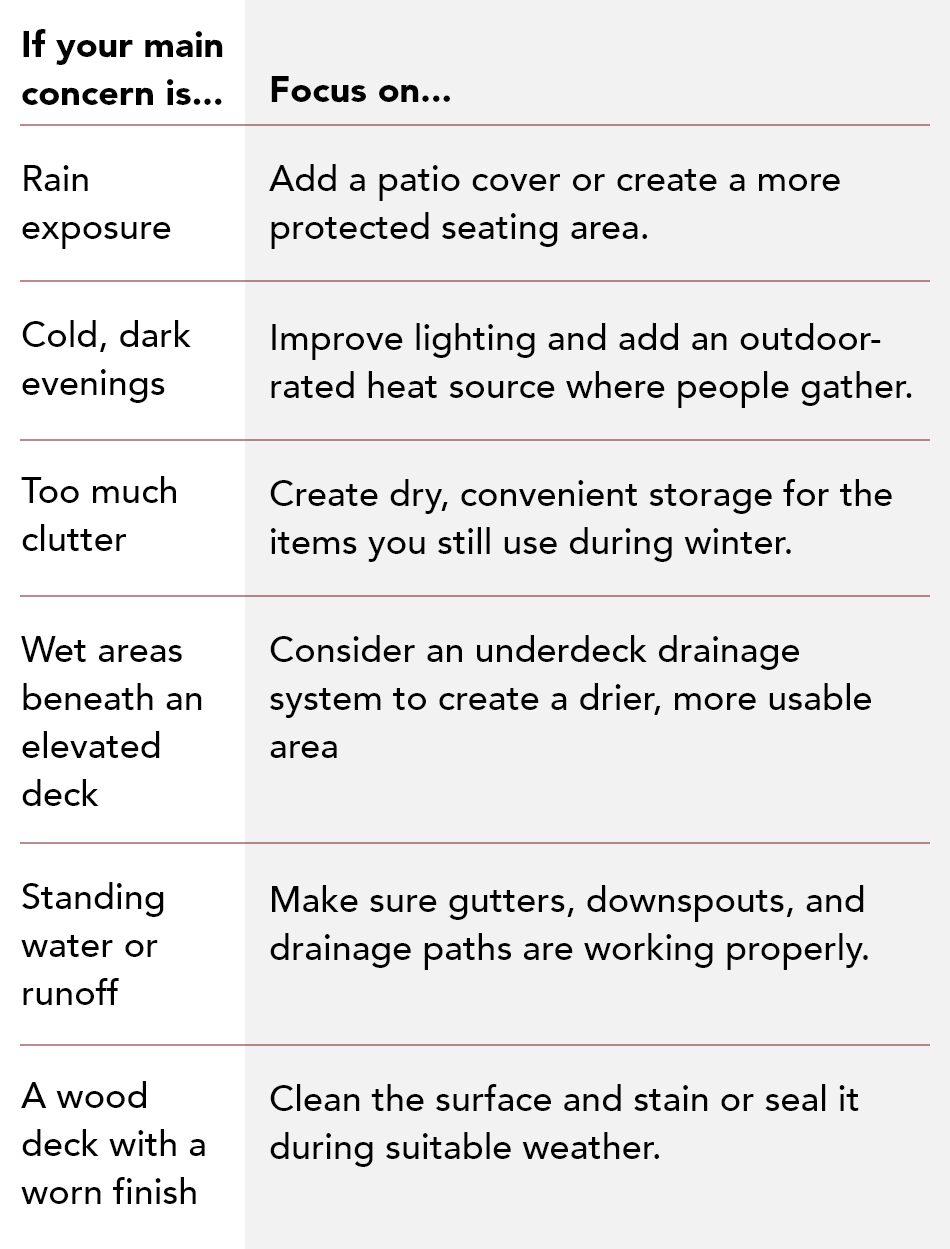
If you’re deciding where to focus your time or budget, start with the updates that solve the biggest problem for the way you use the space.
If your main concern is…
Focus on…
Rain exposure
Add a patio cover or create a more protected seating area.
Cold, dark evenings
Improve lighting and add an outdoor-rated heat source where people gather.
Too much clutter
Create dry, convenient storage for the items you still use during winter.
Wet areas beneath an elevated deck
Consider an underdeck drainage system to create a drier, more usable area.
Standing water or runoff
Make sure gutters, downspouts, and drainage paths are working properly.
A wood deck with a worn finish
Clean the surface and stain or seal it during suitable weather.
You don’t need to tackle everything at once. A few practical improvements can make your deck or patio easier to maintain and more enjoyable to use.
Get your deck or patio ready for winter with Rick’s
The right improvements can help you get more use out of your deck or patio through the wettest months of the year.
Rick’s has decades of experience building and improving outdoor spaces for Pacific Northwest weather. From patio covers and underdeck drainage systems to railings and deck repairs, our contractors can help you compare options based on your home and project goals. If you’re thinking about improving your deck or patio before winter, call the closest Rick’s lcation or contact us or a free estimate.
Frequently Asked Questions About Preparing a Deck or Patio for Winter
-
-
How do you prepare a deck for winter?
Start by cleaning off leaves and debris, checking for loose or damaged boards, and making sure water can drain away from the surface. If you have a wood deck, check whether the existing stain or sealer is still providing adequate protection. If you plan to keep using the space, shelter, lighting, warmth, and dry storage can also make a big difference. -
Should you stain a deck before winter?
If the existing finish is worn and the weather gives you enough dry time for the stain to cure properly, fall can be a good time to stain a wood deck. The important thing is to follow the product’s temperature and drying requirements rather than trying to squeeze the project in during wet weather. -
How do you keep a deck usable during rainy weather?
Start with materials that handle repeated moisture well, then consider adding a patio cover for overhead protection and a drainage plan to manage runoff. For elevated decks, underdeck drainage can also help make the space below more usable. A layout that keeps water moving away from the home can also make the outdoor space easier to manage in wet weather. -
Can you waterproof underneath a deck?
Yes, but the level of protection depends on the system. Underdeck drainage systems capture rainwater that passes through the deck boards and redirect it away from the area below, helping create a much drier space for storage, seating, or other uses. -
What is the best decking for a rainy climate?
There isn’t one best material for every home. Composite decking is a practical choice if you want a lower-maintenance surface that doesn’t require regular staining or sealing. Wood options such as Port Orford Cedar and Tigerwood can also perform well in Oregon and Washington, but they generally require more ongoing care.
-