How to Maintain and Protect Your Deck in Oregon and Washington
If you live in the Pacific Northwest, you know the weather can be unpredictable. Rainy springs, warm summers, cold winters, and temperature swings can all impact the performance of your outdoor spaces.
Over time, changing weather conditions create moisture, expansion, and contraction that put stress on your deck. The good news is that consistent maintenance can add years to its life and help you avoid costly repairs.
Read on to discover why deck maintenance matters, practical maintenance tips, how to extend the life of your deck, how often to maintain it, how maintenance affects a deck’s lifespan, signs your deck needs repair, when to replace it, and how to get the most out of your deck.
Deck maintenance checklist: Start with the basics
Routine deck maintenance doesn’t need to be complicated. A few simple habits can help keep your deck safer, cleaner, and looking its best year after year.
Clean your deck regularly
Remove leaves, debris, mold, and mildew at least once each season.
For composite decks, use manufacturer-recommended cleaning products and avoid harsh chemicals that could damage the surface.
Inspect hardware and railings
Walk your deck periodically and check:
- Railings for movement
- Posts for stability
- Screws and fasteners for rust
- Boards for splitting or soft spots
Catching and fixing small issues early can help prevent larger repairs later.
Seal or stain wood on schedule
For most Oregon and Washington homes, sealing or staining every two to three years helps protect wood from moisture and UV exposure.
Keep in mind that exposure conditions matter. Covered decks and shaded areas may age differently than fully exposed surfaces.
For help with staining, check out our Ultimate Guide to Staining Your Fence or Deck.
Keep vegetation under control
Plants and landscaping can trap moisture against deck boards and posts.
A good rule to follow is to leave at least six inches of clearance around wood structures to support airflow and reduce moisture buildup.
Maintenance habits that help extend deck life
The best way to avoid major deck repairs is to catch small issues early. Consistent maintenance can help extend the life of your deck and preserve both appearance and structural performance.
Keep water moving away from the structure
Make sure drainage paths stay clear and avoid storing items that trap moisture against the deck surface.
Address minor repairs early
Loose fasteners, isolated damage, and small cracks are often easier and less expensive to repair before they spread.
Pay attention to changing conditions
Notice areas that stay damp longer, receive less sunlight, or collect debris. These conditions may require more frequent maintenance.
How often should you maintain your deck in Oregon and Washington?
One of the most common questions homeowners ask is how often deck maintenance is needed.
While every deck and environment is different, this general schedule works well for most homes:
- Seasonally: Clean debris, wash surfaces, and inspect visible wear.
- Annually: Perform a more detailed inspection of boards, railings, hardware, and drainage.
- Every 2 – 3 years: Reseal or restain wood decks.
- As needed: Address loose fasteners, damaged boards, or drainage concerns promptly.
Composite decking generally requires less ongoing maintenance than wood but still benefits from regular cleaning and inspections.
How Maintenance Affects the Lifespan of Your Deck
Consistent maintenance plays a major role in how long your deck will last, especially in the Pacific Northwest climate. Moisture, seasonal temperature changes, UV exposure, and debris buildup can all impact long-term performance over time.
Different deck materials also age differently depending on installation quality, exposure conditions, and ongoing care.
Material
Typical Lifespan
Maintenance Expectations
Pressure-Treated Lumber
10 – 20 years
Requires regular sealing, cleaning, and inspections
Cedar
20 – 30 years
Benefits from routine staining and moisture protection
Composite Decking
25 – 30+ years
Lower maintenance with periodic cleaning and inspections
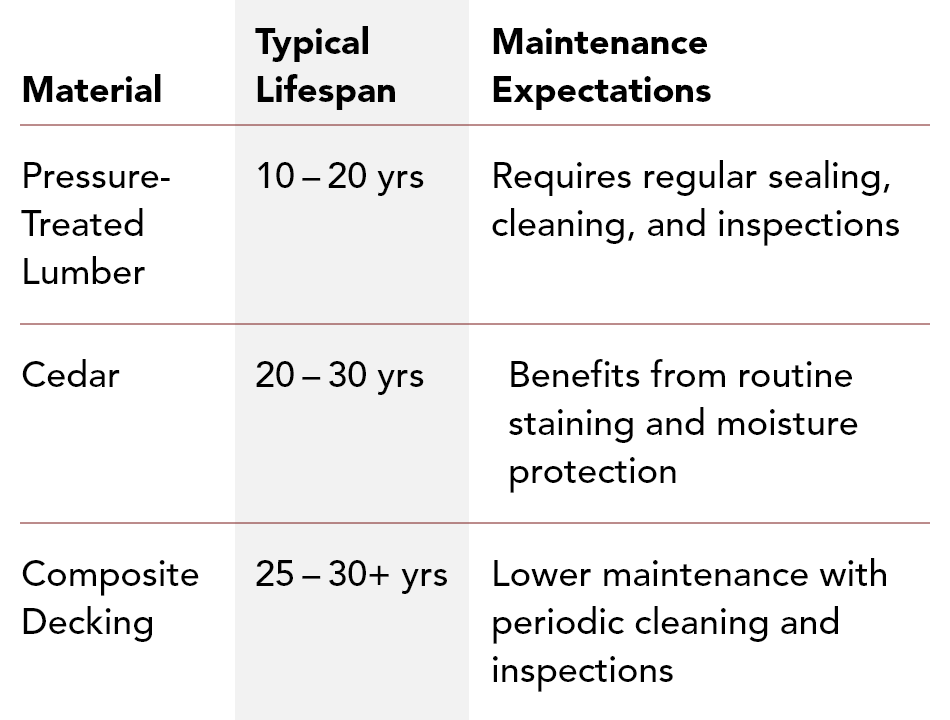
No matter which material you choose, regular inspections and preventative maintenance can help maximize the lifespan of your deck and reduce the likelihood of larger repairs later on.
Signs your deck may need repair
Regular maintenance extends deck life, but every structure eventually reaches a point where repairs may be necessary. Watch for these warning signs:
Soft or spongy boards
Wood that compresses under pressure may indicate moisture intrusion or rot.
Visible rot or decay
When deterioration reaches structural elements like joists or posts, repairs become more limited.
Structural movement
Wobbling railings, shifting boards, or movement underfoot can point to deeper support issues.
Extensive warping or widespread damage
When multiple boards begin failing at once, the issue may extend beyond surface repairs.
Rusted hardware
Corrosion can signal prolonged moisture exposure and hidden deterioration.
Loose railings or unstable stairs
Safety concerns should always be evaluated quickly.
Should you repair or replace your deck?
Many homeowners wonder whether continuing repairs still makes financial sense.
Replacement may make more sense when:
- Structural integrity is compromised. Failed posts, joists, or footing cannot be patched effectively.
- Problems keep returning. Fixing symptoms does not solve root causes.
- Repair costs continue adding up.
- You want better materials. High-quality materials, such as composite or cedar, provide longer life with less upkeep.
- Curb appeal matters. A rebuilt deck enhances property value.
- You want long-term peace of mind. A quality deck can handle 15 to 25 years of weather.
A rebuild also creates opportunities to improve layout, update materials, and reduce future maintenance demands.
Plan for a safe, long-lasting deck upgrade
Whether you are maintaining your current deck or planning a new one, we’re here to help. At Rick’s Custom Fencing & Decking, we build fences and decks with quality materials and trusted craftsmanship, designed to stand up to Oregon and Washington weather.
When you are ready to explore your deck options, contact us for a free estimate or call your nearest Rick’s location to get started.
Deck maintenance FAQs
How long should a deck last in the Pacific Northwest?
Most cedar decks last twenty to thirty years depending on materials and maintenance. Composite decks often last thirty years or more.
What causes the most deck damage in Oregon and Washington?
Moisture exposure, heavy rainfall, and trapped debris are common contributors to deck wear over time.
How often should I maintain my deck?
Seasonal cleaning and annual inspections are a good baseline for most decks. Wood decks may also require sealing or staining every few years.
Is it better to repair or replace a deck?
If repair costs continue increasing or structural components are failing, replacement may provide better long-term value.
What is the best low-maintenance deck material for Oregon and Washington?
Composite decking performs well in this region and requires minimal maintenance.
How often should I seal my cedar deck?
Every two to three years is recommended, though shaded or damp areas may need more frequent care.