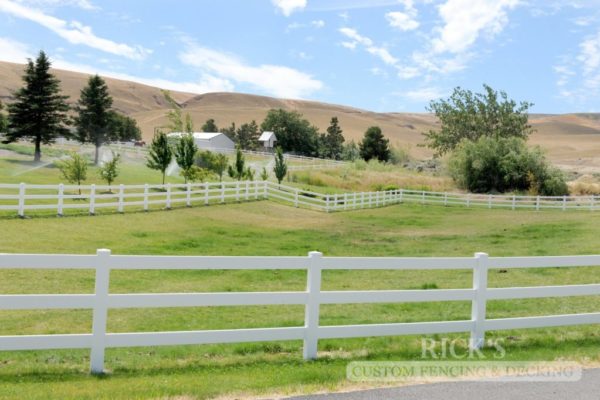
PASTURE RAIL FENCE INSTALLATION FOR HOMES AND PROPERTIES IN OREGON & WASHINGTON
Rick’s Custom Fencing & Decking installs pasture rail fences for residential properties throughout Oregon & Washington. Pasture rail fencing is designed to define property boundaries while maintaining an open, natural appearance.
Many property owners choose pasture rail fencing when they want a fence that outlines a yard or acreage without creating a solid visual barrier. The horizontal rail design keeps the landscape visible while still providing a clear boundary around the property.
Pasture rail fencing is commonly used for larger residential properties, acreage homes, and open landscapes where maintaining a natural look is an important part of the overall property design.
Start Your Project Today!
Pasture Rail Fence Styles and Options
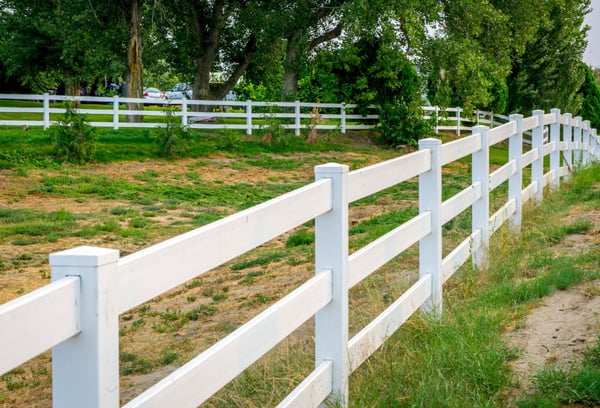
Vinyl Pasture Rail
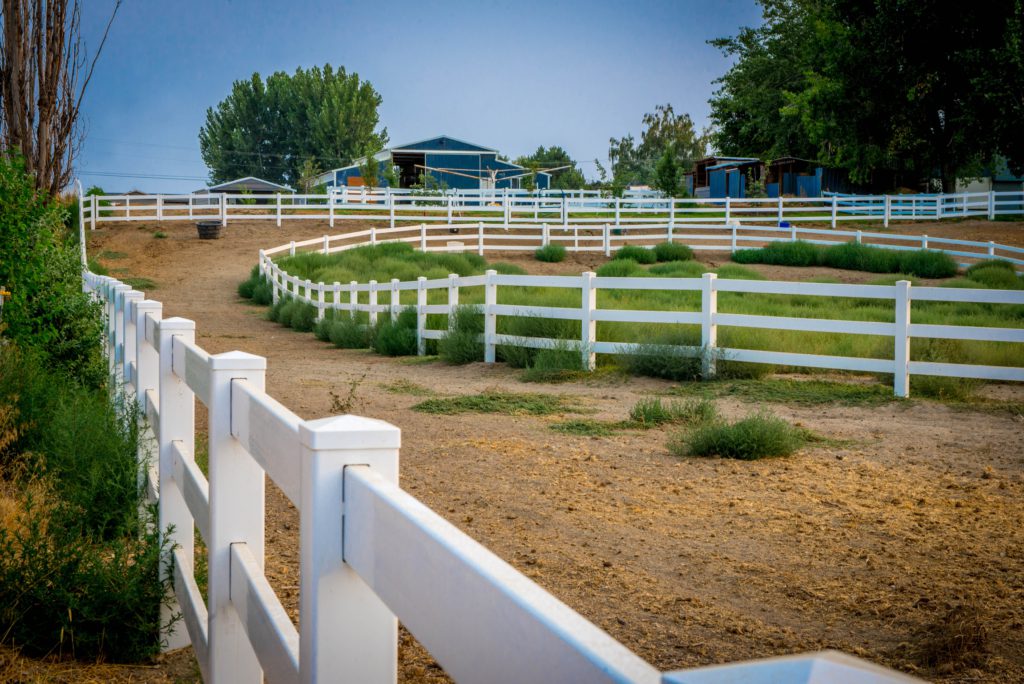
Vinyl pasture rail fencing provides an open boundary for large properties while using low-maintenance vinyl rails. This style is commonly used for acreage, horse properties, and rural landscapes where durability and visibility are important.

Pipe Rail
Pipe rail fencing uses welded steel rails to create a durable pasture boundary designed for livestock areas and large properties. This style offers strong structural support while maintaining clear visibility across the property.
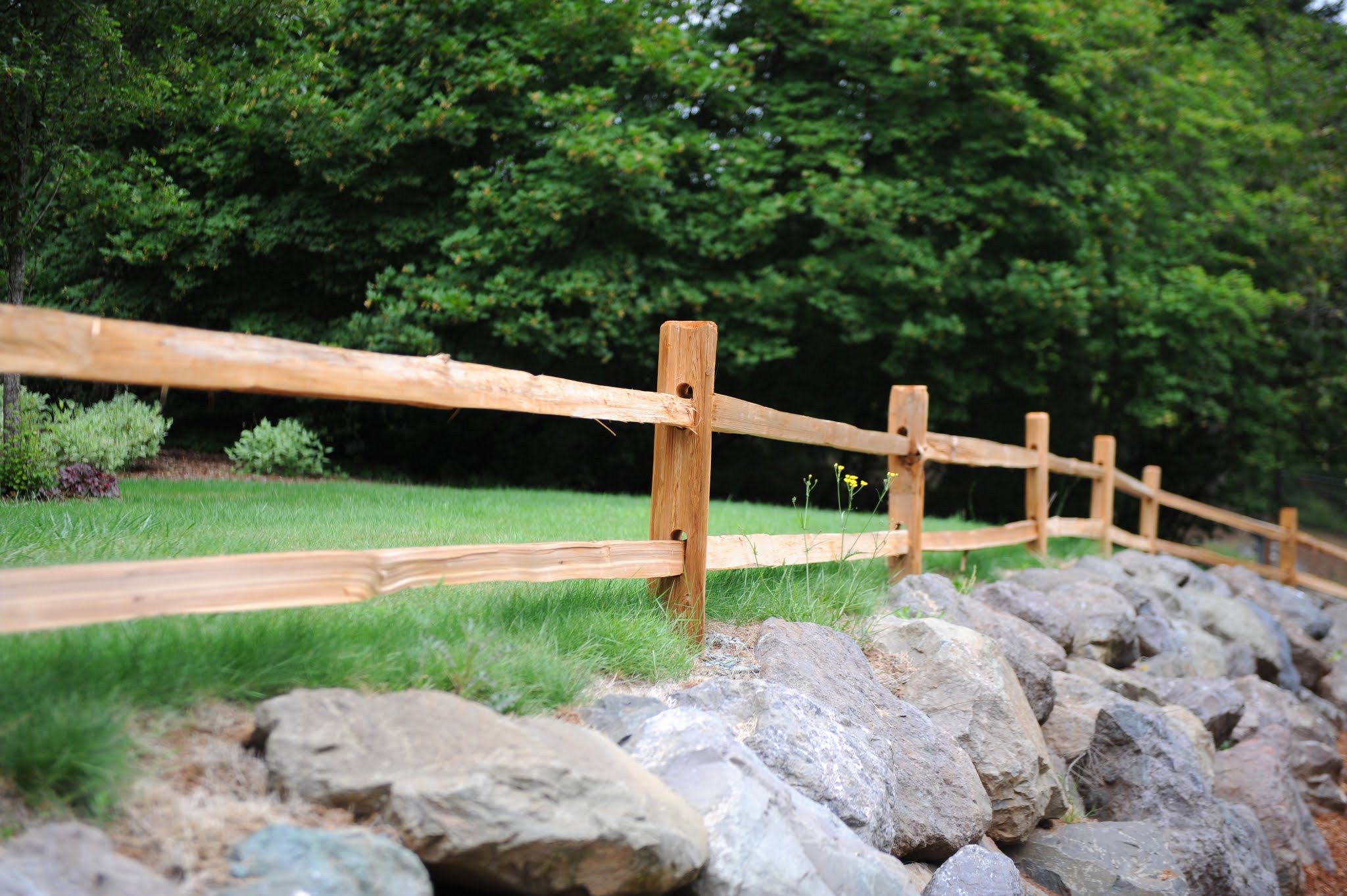
Cedar Split Rail
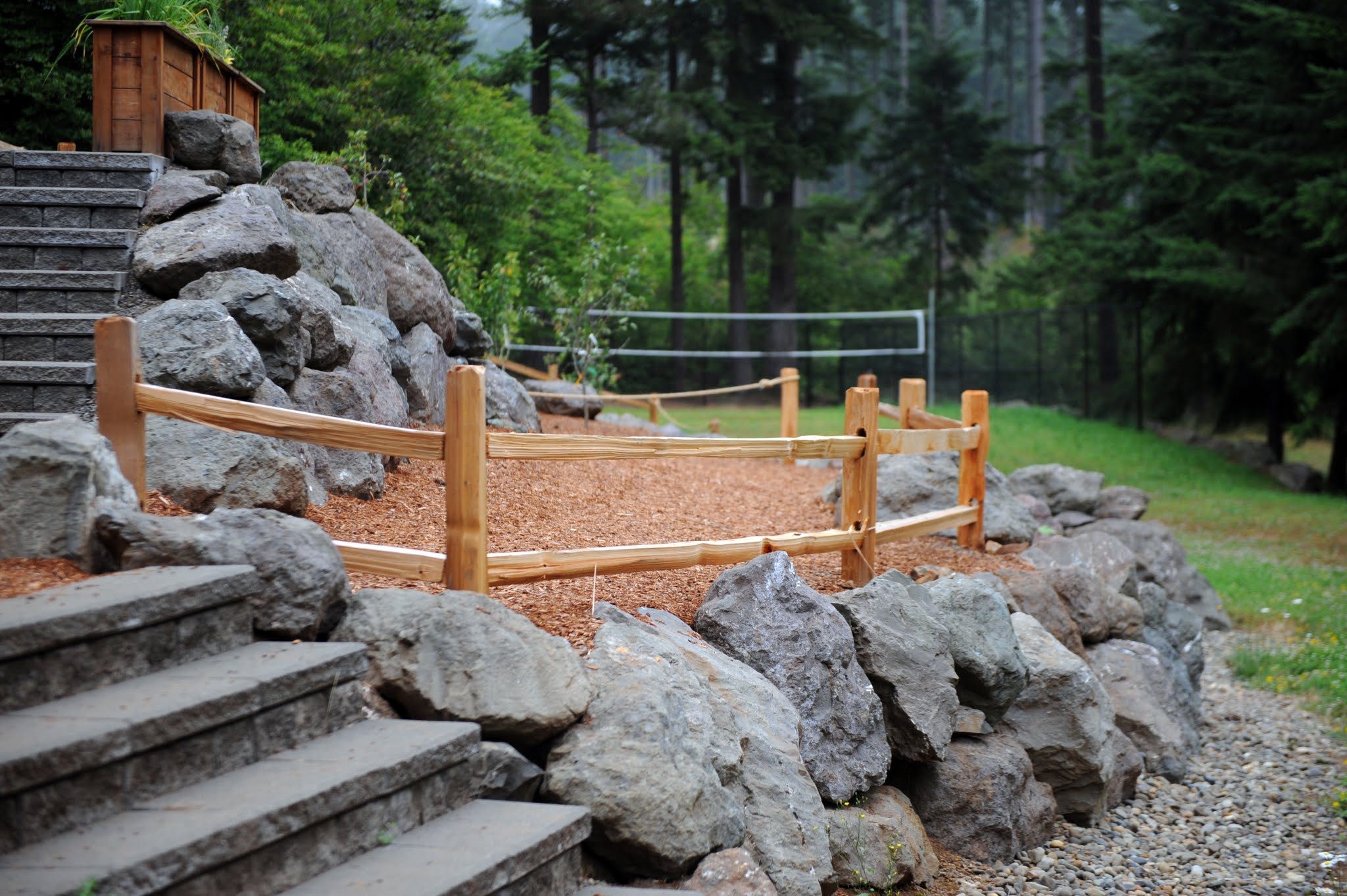
Cedar split rail fencing uses natural cedar rails to create a traditional pasture fence style. This open design is commonly used for rural properties, property boundaries, and landscape definition.
Three Ways to Get a Free Fence Estimate
Your time is valuable, so we make it easy to get your project estimate started. Choose the option that works best for you below:

SUBMIT A FORM
Fill out our quick online form!
We’ll call you back within 15 minutes during business hours. Fast, easy, and no waiting on hold.

CALL US DIRECTLY
Prefer to talk it through?
Call your nearest location and speak with one of our expert estimators*. We’ll answer your questions and help schedule a design consultation that fits your schedule.
SALEM: 971-273-2040
VANCOUVER: 360-342-4997
GRESHAM: 971-431-7285
HILLSBORO: 971-247-7471 EUGENE: 541-214-2522
*Calls answered and returned during business hours.

VISIT YOUR NEAREST RICK'S SHOWROOM
6 convenient retail locations!
Stop by one of our locations to explore materials, view displays, and chat with our team in person. No appointment necessary!
Why Property Owners Choose Pasture Rail Fencing
Pasture rail fencing offers a simple and practical way to define property lines while preserving an open feel across the landscape.
Open Fence Design That Maintains Visibility
Pasture rail fences use horizontal rails attached to evenly spaced posts. This layout keeps sightlines open across the property while still marking the boundary.
Well Suited for Larger Properties
Because the fence structure uses fewer materials than solid fencing styles, pasture rail fencing is often used for longer fence runs across larger properties or acreage.
Traditional Rural Fence Appearance
Pasture rail fencing has long been used on farms and rural properties. The clean rail design complements open landscapes, driveways, and natural surroundings.
Flexible Fence Layout
Pasture rail fences can be installed along property lines, driveways, and open yard areas where a defined boundary is needed without closing off the view.
Rick’s installs pasture rail fencing with attention to post alignment, rail spacing, and terrain changes so the finished fence follows the landscape cleanly.
18-Month, No-Interest Financing on Approved Credit
We want you to have the BEST at an affordable price and at the right time for you! That’s why we work with lenders in the Home Services industry to develop financing options that suit your needs. This month, enjoy 18-Month, no-interest financing on all installed projects!
Planning a Pasture Rail Fence Installation
Installing a pasture rail fence begins with reviewing the layout of the property and determining where the fence will be placed.
During the planning process we review:
- Property boundaries and fence layout
- Rail height and number of rails
- Gate locations and access points
- Terrain changes across the property
Because pasture rail fences often extend across longer property lines, careful post placement and consistent rail alignment help maintain a straight and balanced fence line.
Rick’s crews install pasture rail fences with attention to spacing, alignment, and grade changes so the fence follows the natural contours of the property.
Is Pasture Rail Fencing Right for Your Property?
Pasture rail fencing works well for properties where defining the boundary is important but maintaining an open landscape is also a priority.
This fence style is commonly used for acreage homes, rural properties, and residential lots where homeowners want a fence that complements the surrounding environment without creating a solid barrier.
Pasture Rail Fence Installation FAQs
Below are answers to some of the most common questions homeowners ask about pasture rail fence longevity, staining, maintenance, and seasonal protection — so you know what to expect and how to keep your fence looking its best over time.
-
-
Does pasture rail fencing provide privacy?
Pasture rail fencing is designed to maintain an open appearance rather than create privacy. Homeowners typically choose it for boundary definition rather than visual screening. -
Can pasture rail fencing be installed on uneven terrain?
Yes. Pasture rail fencing can follow the natural grade of the property, and post placement can be adjusted to accommodate terrain changes. -
How many rails does a pasture fence have?
Most pasture rail fences use 2 or 3 horizontal rails between each post. The number of rails can vary depending on the purpose of the fence. -
What is pasture rail fencing used for?
Pasture rail fencing is commonly used to define property boundaries, outline driveways, and enclose larger residential properties while maintaining visibility across the landscape.
-
Request an Estimate for Pasture Rail Fence Installation in Oregon & Washington
If you are planning a pasture rail fence in Oregon & Washington, Rick’s can review fence height, layout, and gate placement to determine the best configuration for your property.