The Sound of Giving: How Rick’s Port Orford Cedar Becomes Handmade Ukuleles
Most people see a Port Orford Cedar fence board as a building material. Phil Baus sees the beginning of a handmade ukulele.
Phil carefully sorts through Rick’s Port Orford Cedar, looking for clear, straight-grained sections with the strength and character he needs. He then shapes each piece by hand, pairs it with other woods, and adds personal details that make every instrument unique.
For Phil, the most rewarding part isn’t finishing a ukulele. It’s giving it away. Over the years, his instruments have reached caregivers, youth programs, charitable organizations, and people who have helped him through difficult times.
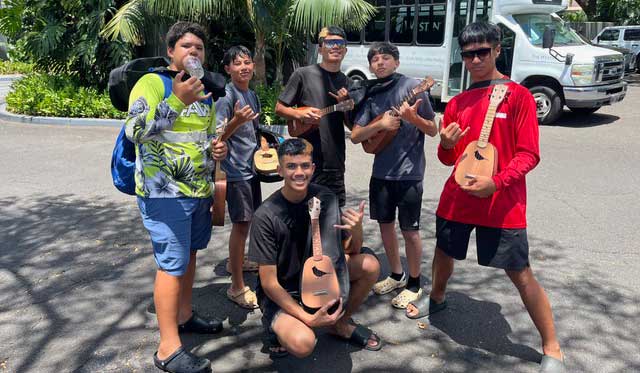
Recently, many of Phil’s ukuleles have traveled to Maui, where The Kanikapila Project is using music to help people reconnect and heal after the Lahaina fires.
Meet Phil, the maker behind the instruments
Phil’s instrument-making hobby began about 15 years ago through Paddle Oregon, a whitewater river trip fundraiser. Volunteers helped guide participants safely down the river, and Phil felt those leaders deserved more recognition. As a thank you, he began making small mountain dulcimers as gifts for them.
While experimenting with one of his designs, Phil added a ukulele-style body to a dulcimer. He liked the result and began wondering why he shouldn’t simply try making ukuleles. That experiment became a lasting hobby and a way for him to thank the people and organizations that have made a difference in his life and the lives of others.
Phil describes himself as more of a builder than a musician, and he keeps his workshop operation simple. His wife likes to joke that the hobby “keeps him off the streets.” But behind that humor is a genuine love for the craft and the joy of imagining where each finished instrument might go next.
“I build ukuleles because I really like giving them away,” — Phil
As Phil began building more ukuleles, he needed a reliable source for quality Port Orford Cedar. That’s what first brought him to Rick’s Custom Fencing & Decking, where Ty helped him sort through boards to find the clear, straight-grained pieces his instruments require.
Today, Dylan, with Rick’s Fencing, continues that tradition, helping Phil find wood suited to the care and craftsmanship each instrument will receive.
How a ukulele begins with a board of Port Orford Cedar
With help from Rick’s, Phil sorts through the available Port Orford Cedar to find the sections best suited for his instruments.
He turns over each board and studies the grain, looking for a clear section without knots. He’s especially interested in quarter-sawn grain because it gives the soundboard strength while still allowing it to vibrate freely.
Phil doesn’t need an entire fence board to make one ukulele. A clean section about a foot long can provide enough material for the instrument’s soundbox.
Why Port Orford Cedar works so well for ukuleles
The strength that makes Port Orford Cedar well suited for fences and decks also translates well to ukuleles, though the wood is used in a much thinner form.
“What makes [Port Orford Cedar] a great wood is its high strength-to-weight ratio. If it were a really heavy wood, it wouldn’t vibrate as well,” Phil said.
Phil also appreciates a quality that has less to do with the finished instrument’s performance: the scent. Port Orford Cedar has a clean, pleasant smell that makes it especially enjoyable to cut, shape, and sand in his workshop.
“I work with Yellow Cedar, and that smells like a wet dog,” Phil added. “There’s a real difference there.”
From cedar board to finished instrument
Once Phil has selected the right sections of cedar, the ukulele begins to take shape one piece at a time.
He uses the cedar to create the soundboard, back, and sides of the instrument. The side pieces are soaked overnight, then heated with an iron and slowly bent around a form. Once dry, they hold the curves that’ll give the ukulele its familiar shape.
Phil builds the neck from a different wood. After gluing the pieces together, he cuts the basic profile, then carefully shapes and sands it until it feels right.
A batch of four usually takes about ten days when Phil spends four to six hours in the workshop each day.
Phil often personalizes the soundboard with a custom engraving or cutout based on the recipient’s interests.
This isn’t factory production. Each build gives Phil time to study the wood, solve problems as they come up, and add details that make the finished instrument personal. By the time it leaves his workshop, a board of Port Orford Cedar has become a one-of-a-kind ukulele ready to be played.
Every ukulele carries part of its recipient’s story
Phil doesn’t approach every ukulele the same way. When he knows who’ll receive an instrument, he likes to learn about their interests, background, or the places that matter to them. Those details often inspire the sound hole, engraving, or wood-burned design he adds to the finished piece.
For his grandson, Phil created a dinosaur-shaped sound hole and added wood-burned dinosaur details to the back. Other ukuleles have featured coffee cups, a skier, and a sound hole based on the Aruban flag.
These details help each ukulele feel personal to the person receiving it, turning a handmade instrument into something that reflects part of their story.
Bringing music and comfort to Lahaina
Phil’s instruments have always been gifts, but after the Lahaina fires, they began to support healing through music.
In 2023, the fires took lives, homes, belongings, gathering places, and many of the familiar parts of daily life that help people feel connected to their community and culture.
Phil knows a handmade ukulele can’t replace what was lost. What it can offer is a reason to gather, play, remember, and experience moments of comfort during a long recovery.
That’s where The Kanikapila Project comes in. The organization shares the healing power of music therapy and the joy of the ukulele with communities across Maui. It expands access to music therapists while creating opportunities for people to listen, learn to play, and take part in kanikapila, or informal group music-making.
The ukulele’s portable size and approachable design make it accessible to children and adults, including people with little or no musical experience. It can be played quietly on its own, used during a therapeutic session, or become part of a larger group playing together.
About four dozen of Phil’s recent ukuleles have gone to The Kanikapila Project, which shares them with residents and community programs across Maui.
These instruments aren’t meant to erase grief or replace what was lost. They’re small, carefully made contributions to a much larger recovery effort.
A wider circle of giving
Phil’s ukuleles have traveled far beyond his workshop, reaching healthcare workers, youth organizations, churches, charitable programs, and community groups.
Some of the most personal gifts have gone to people who helped him through difficult times of his own. After skiing accidents, Phil made ukuleles for therapists, medical professionals, ski patrol members, ambulance crews, and others who supported his recovery.
Other instruments have supported charity auctions and mission work in places such as Aruba and Kenya.
For Phil, building a ukulele is a way to turn gratitude into something handmade. Each one carries his time, care, and appreciation, then passes those things along to the person or organization receiving it.
A material that becomes something more
Stories like Phil’s remind us that everyday building materials can become part of something much bigger than we imagine.
We’re grateful that the Port Orford Cedar we supply has found its way into Phil’s workshop and, through his craftsmanship, into the hands of people and organizations who’ll treasure it.
Before long, Phil will likely be visiting Rick’s to find more Port Orford Cedar for his next ukuleles.
He’ll sort through the boards, looking for the right grain. Back in his workshop, he’ll shape, assemble, and finish the cedar into another handmade ukulele.
From there, its story will continue in someone else’s hands, and that’s what makes Phil’s work so special.