Adding an Underdeck Drainage System to an Existing Deck: What to Know
If you already have an elevated deck, you may have looked at the space underneath and wondered if you could put it to better use. The problem is that rainwater naturally passes through the gaps between deck boards, which can leave the area below too wet for dependable seating, storage, or other outdoor uses.
An underdeck drainage system can help manage that runoff, but adding one to an existing deck takes some planning. Not every deck or property has the same layout, so the right approach starts with understanding the space you already have.
Here’s what Oregon and Washington homeowners should know before adding an underdeck drainage system to an existing deck.
What does an underdeck drainage system do?
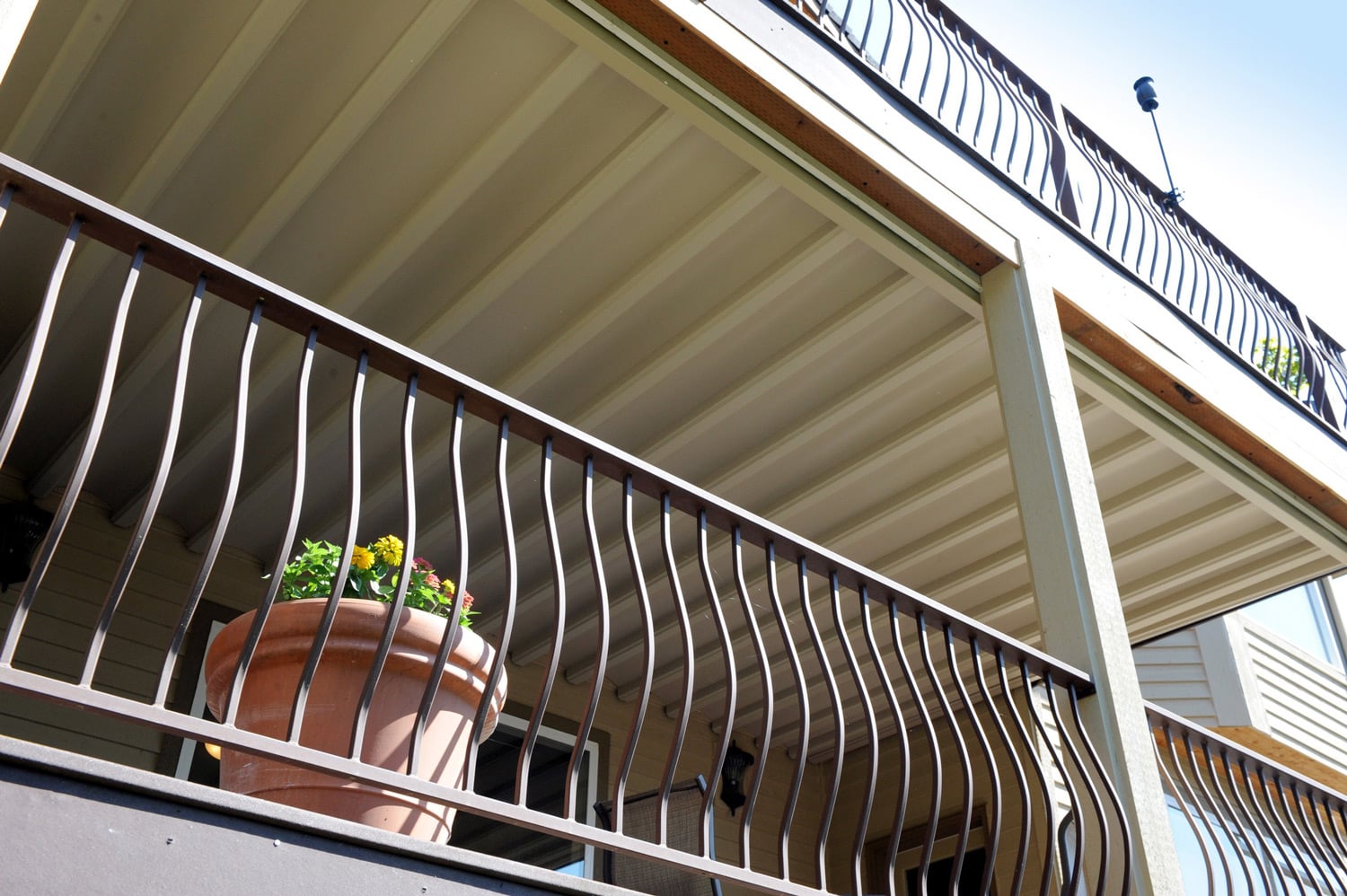
An underdeck drainage system catches the rainwater that naturally passes through the gaps between your deck boards and redirects it toward a controlled drainage path rather than letting it drip onto the space below.
By managing where that water goes, the system helps keep the area beneath the deck dry and usable during rainy weather. In many ways, it allows the deck to function more like a patio cover for the space below.
Can you add an underdeck drainage system to an existing deck?
Yes, many existing elevated decks can be evaluated for an underdeck drainage system.
The deck and surrounding property need to provide enough space, access, and a practical way to route runoff. An on-site evaluation can determine what installation options make sense for your particular deck.
What should you consider before adding an underdeck drainage system?
If you’re thinking of adding an underdeck system to a deck that’s already in place, there are a few things worth looking at before moving forward.
Is there enough clearance beneath the deck?
An underdeck system needs sufficient space beneath the elevated deck framing. The amount of available clearance also matters if you plan to use the lower area for seating, storage, or another covered outdoor purpose.
Where can the water be directed?
The system needs a practical drainage path. A slight, consistent slope helps runoff move away from the deck toward a controlled drainage point instead of collecting underneath it.
How accessible is the underside of the deck?
The layout of the deck and surrounding area should be reviewed to determine how the system can be installed and how runoff can be routed.
How do you want to use the space?
Your plans for the area below can help shape the project. A space meant for storage may have different priorities than one you want to use for seating or as a covered gathering area.
Some systems can also create a cleaner finished appearance beneath the deck compared with exposed framing and joists.
Why does the drainage path matter?
One of the biggest questions with an existing deck is where the runoff can go. There needs to be a practical path for moving collected water away from the deck area rather than allowing it to pool underneath.
That’s one reason the surrounding layout matters when an existing deck is evaluated. The installation needs the right drainage direction, slope, and alignment to move water where it’s intended to go.
What should you look for beneath your deck after it rains?
A rainy day can tell you a lot about how the space beneath your deck currently handles water. Once the rain has had time to move through the deck boards, take a look underneath and pay attention to a few things:
- Where does rainwater come through? Notice whether dripping is concentrated in one part of the deck or spread across most of the space.
- Where does the runoff travel? Once water reaches the ground, look at whether it moves away from the deck or lingers nearby.
- How long does the area stay damp? If there are spots that remain wet long after the rain stops, it can make the space less desirable, even when water isn’t actively dripping through.
- Would better water management change how you use the area? If dripping is the main reason the space sits unused, an underdeck drainage system may be worth exploring.
You don’t need to diagnose the drainage yourself. These observations simply give you a clearer picture of how the area behaves during wet weather and can make it easier to discuss the space when your deck is evaluated.
Is an underdeck drainage system right for your existing deck?
An underdeck drainage system may be a good fit if your deck and property have the right conditions for it.
An existing deck may be worth evaluating if:
- It’s elevated with usable space below
- Rain currently limits how you use the lower area
- There appears to be enough clearance and access underneath
- Your property provides a practical place to direct runoff
These are good starting points, but the deck and surrounding layout still need to be reviewed to determine what installation options make sense.
Talk with Rick’s about an underdeck drainage system
If you’re interested in getting more use from the space beneath your elevated deck, Rick’s can review your deck layout and help determine what underdeck drainage options make sense for your project.
Rick’s installs underdeck drainage systems for homeowners throughout Oregon and Washington. Get a free estimate or call the nearest Rick’s location to discuss your deck, drainage conditions, and plans for the space below.
Frequently asked questions about underdeck drainage systems
-
-
What should I consider before adding underdeck drainage to an existing deck?
Start with the deck’s height and structure, access underneath, and where collected runoff could be directed. You should also think about how you want to use the lower space, since plans for seating, storage, or covered outdoor use can affect how the project is approached. -
How does an underdeck drainage system direct water away from the deck?
An underdeck drainage system uses a slight, consistent slope to move captured runoff toward a controlled drainage point. Proper drainage direction and alignment help water continue flowing away from the deck area instead of collecting beneath it. -
How much clearance do you need beneath a deck for an underdeck system?
There isn’t one required clearance that works for every deck. The amount of space needed depends on the deck’s height and structure, access beneath it, the drainage layout, and how you plan to use the area below. Rick’s reviews the deck and surrounding space before recommending an installation approach, since adequate clearance is important for both the drainage system and the intended use of the space underneath. -
Do underdeck drainage systems completely stop water from reaching the area below?
Drainage systems are designed to capture and redirect most water runoff from the deck surface above. -
Can the space under the deck be used after installing a drainage system?
Yes. Many homeowners use the space beneath their deck for storage or additional outdoor seating once a drainage system is installed. -
Do underdeck drainage systems work with all decks?
These systems are typically designed for elevated decks where water passes between deck boards. -
What is an underdeck drainage system?
An underdeck drainage system is installed beneath an elevated deck to capture rainwater and redirect it away from the space below.
-